
Bracelet sizes & prices
Prices in Philippine pesos, per finished bracelet, for the named variants below. Our team confirms availability, wrist fit, and the final amount before payment.
Amethyst
| Bead size / style | Price per bracelet |
|---|---|
| 6 mm | ₱599.00 |
| 8 mm | ₱799.00 |
| 10 mm | ₱999.00 |
| 12 mm | ₱1,099.00 |
| Chipstone Regular | ₱350.00 |
Amethyst Chevron
| Bead size / style | Price per bracelet |
|---|---|
| 6 mm | ₱599.00 |
Amethyst Lilac (Grade 7-A)
| Bead size / style | Price per bracelet |
|---|---|
| 6 mm | ₱1,899.00 |
| 8 mm | ₱2,199.00 |
| 10 mm | ₱2,499.00 |
| 12 mm | ₱2,799.00 |
Grade labels are supplier descriptions.
Choose your bracelet and send an order inquiry · View the complete price guide
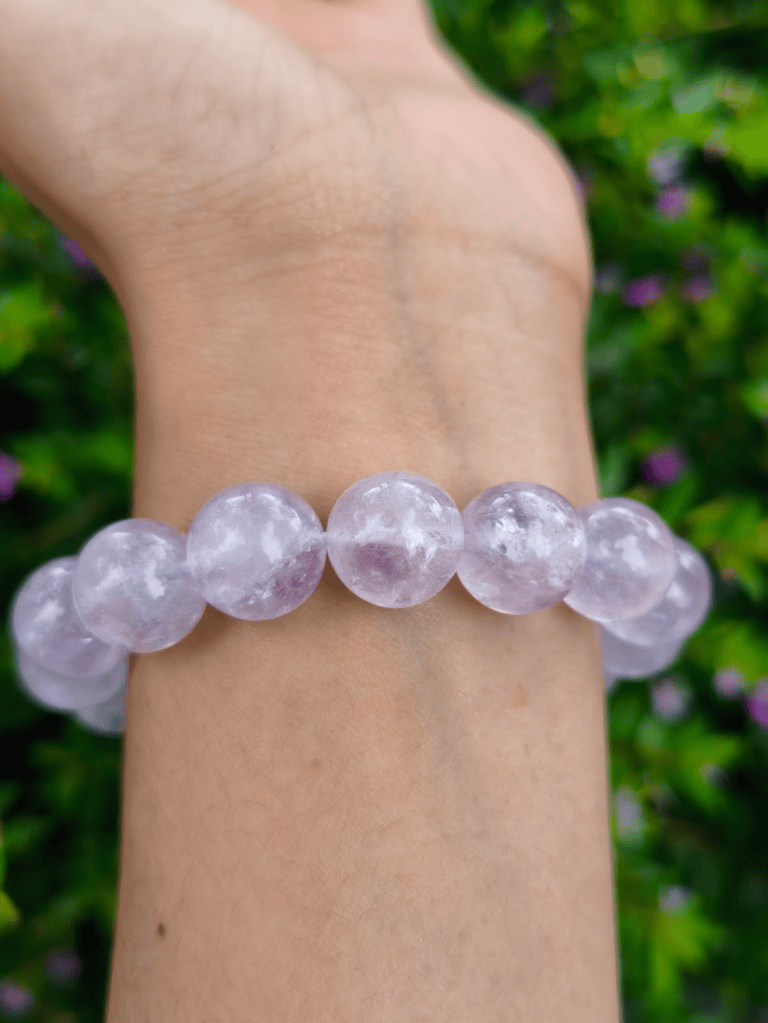
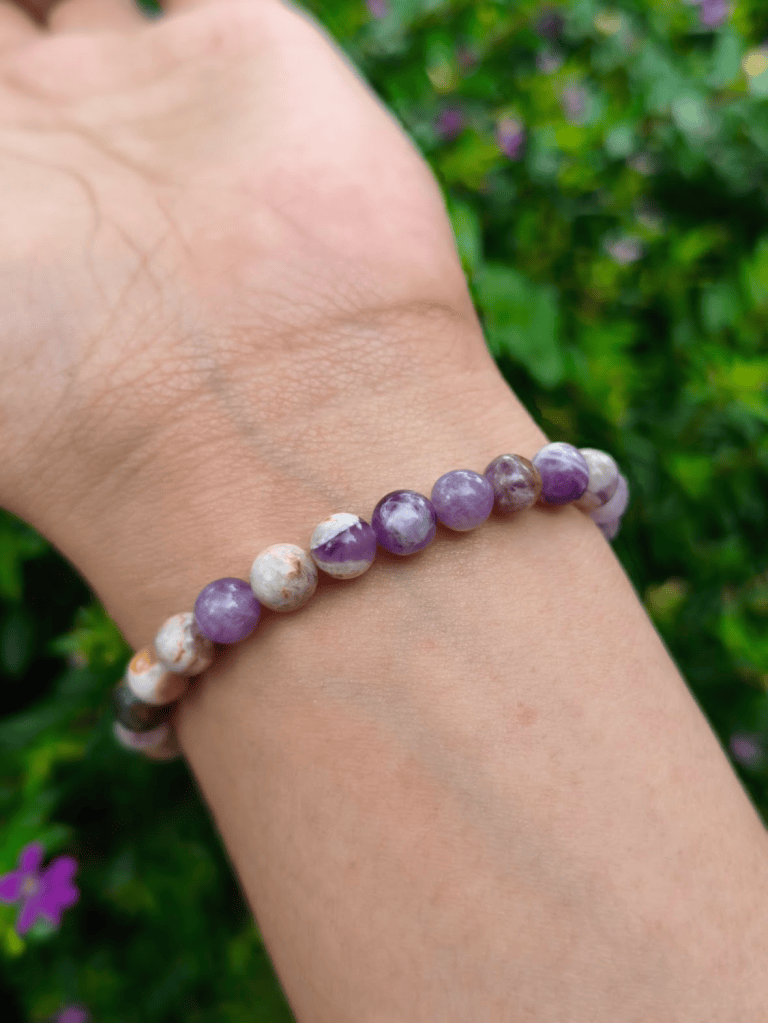
Choose your bead size and wrist circumference on the order form. Our team will confirm available materials and the final price before payment.
Material reference
Amethyst · Himlay ng Isip
Scientific identity, documented history, and community contexts are presented with sources. TÁWID’s contemporary design interpretation is identified separately.
Material identity
Amethyst is the purple variety of crystalline quartz. Its colour can range from pale lilac to deep purple, with bluish or reddish components. GIA describes angular zones of stronger and weaker colour within individual crystals. Such zoning is part of the material’s observable appearance and can affect how a cutter positions a stone.
A bead’s colour depth, transparency, inclusions, and finishing are useful descriptive features. They are separate questions from its country of origin and from any treatment history. A similar purple appearance can occur in different gem species, so colour alone is not a complete mineral identification. [1] [3]
Documented historical context
GIA illustrates an amethyst necklace with beads dated to about 2000 BCE and a central stone bearing a South Arabian inscription from the eighth century BCE. The different dates suggest that the ornament’s materials and inscription have different histories.
Greek wine-related lore associated amethyst with Dionysus; the Roman counterpart was Bacchus. Stories that it could prevent intoxication connected the stone’s wine-like colour with narratives about drinking and conduct. They record belief rather than a physiological effect.
In later Christian and European royal settings, amethyst appears in bishops’ rings and coronation regalia. Its prestige was expressed through religious office and royal display. Its present February birthstone role adds a further setting in gift giving and personal adornment. [2]
TÁWID’s contemporary interpretation
Himlay ng Isip is TÁWID’s contemporary title for reflection and deliberate rest.


Leave a Reply