
Bracelet sizes & prices
Prices in Philippine pesos, per finished bracelet, for the named variants below. Our team confirms availability, wrist fit, and the final amount before payment.
Peridot (Grade 7A)
| Bead size / style | Price per bracelet |
|---|---|
| 6 mm | ₱1,299.00 |
| 8 mm | ₱1,699.00 |
| 10 mm | ₱2,099.00 |
| 12 mm | ₱2,399.00 |
Grade labels are supplier descriptions.
Choose your bracelet and send an order inquiry · View the complete price guide
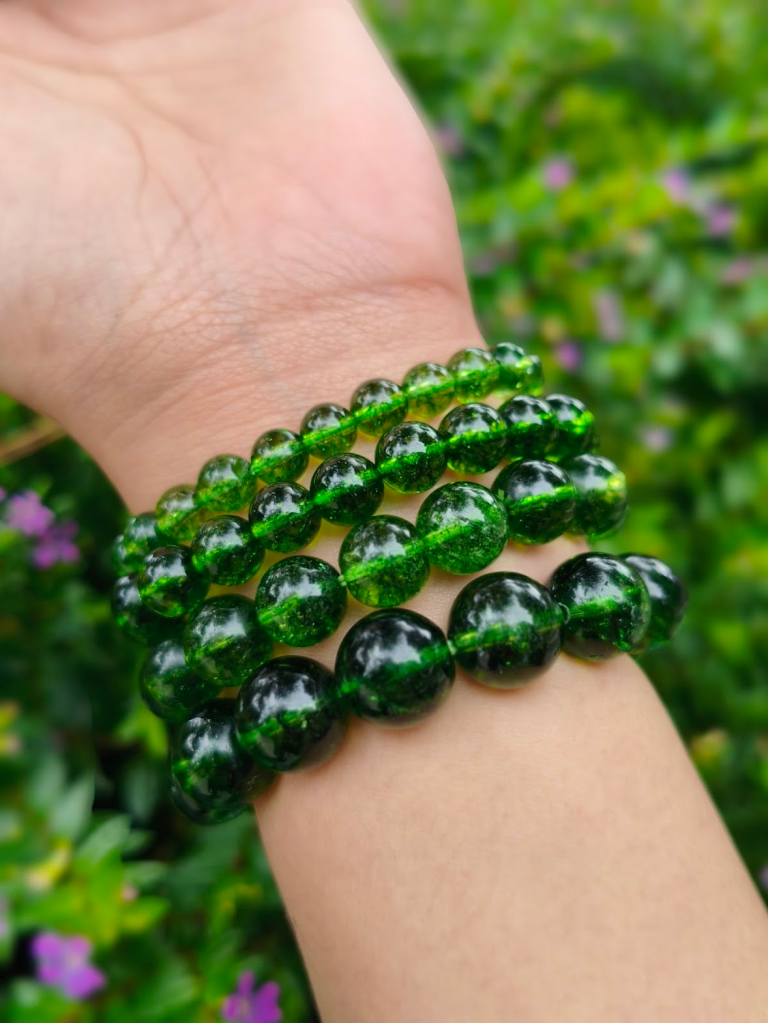
Choose your bead size and wrist circumference on the order form. Our team will confirm available materials and the final price before payment.
Material reference
Peridot · Sariwang Liwanag
Scientific identity, documented history, and community contexts are presented with sources. TÁWID’s contemporary design interpretation is identified separately.
Material identity
Peridot is gem-quality olivine. Iron within the material contributes its green colour. GIA describes most commercial peridot as terrestrial, associated with mantle-derived rocks and brought towards the surface through geological processes that can include volcanism. Peridot can also occur in meteorites, but that rare occurrence should not be used to imply an extraterrestrial origin for ordinary retail beads. [1]
Documented historical context
GIA describes ancient extraction of a green gemstone on the Red Sea island known historically as Topazios, now Zabargad or St John’s Island. The material is now identified as peridot. The old island name also illustrates a problem in reading historical gem descriptions: names did not necessarily match modern mineral categories, and “topaz” in an early account cannot always be read as the mineral topaz recognised today.
Misidentification continued in later settings. Green gems on the shrine of the Three Holy Kings at Cologne Cathedral were long regarded as emeralds but are identified by GIA as peridots. This example places the stone within a particular Christian treasury and demonstrates why later gemological identification can revise an object’s received description.
A history of peridot can therefore follow mining, naming, collecting and reclassification as well as adornment. Reports of protective beliefs are records of what certain people attributed to an object, rather than evidence of a material effect. TÁWID’s “Sariwang Liwanag” is a contemporary reflection on renewal and care, kept distinct from those historical accounts. [2]
TÁWID’s contemporary interpretation
Sariwang Liwanag is TÁWID’s contemporary title for renewal through continued work and care.


Leave a Reply